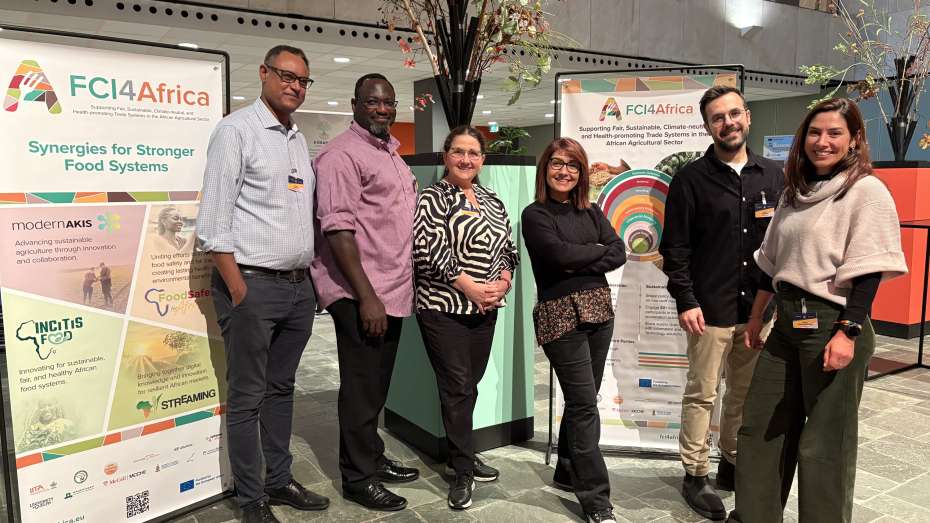
To mark this year’s World Food Safety Day, four EU-funded projects – FCI4Africa, FoodSafety4Africa, UP-RISE, and HealthyDiets4Africa – jointly co-organised the World Food Safety Day Symposium for Next Gen Food Safety Practitioners on June 4-5, 2025.
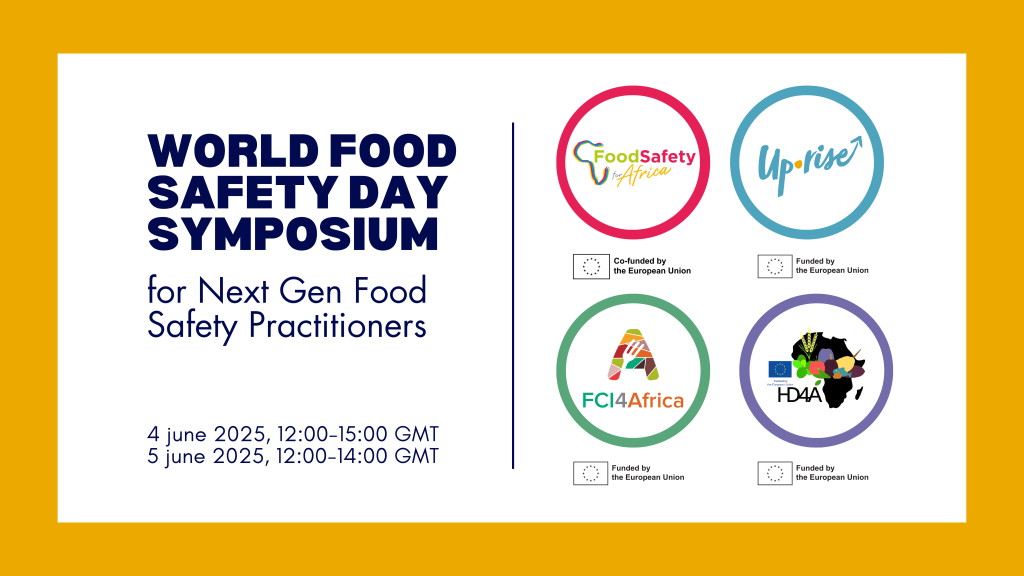
The collaborative online event aimed at:
- Highlighting the crucial role of science in building food safety systems across Africa.
- Fostering meaningful dialogue and knowledge exchange among researchers, policymakers, and project stakeholders.
With over 200 registrations, the event demonstrated strong engagement from the food safety and nutrition communities. Day One brought together 96 participants for lively and interactive sessions, while Day Two saw 65 attendees actively participating in poster presentations led by early career researchers.
The 2025 theme, “Science in Action”, was central to the Symposium, showcasing how scientific research is shaping food safety policies, practices, and solutions across the continent.
FCI4Africa in Action: Contributing Science, Strategy, and Solutions
As one of the co-organisers, FCI4Africa played a key role in both the strategic framing and scientific content of the event. The project aims to foster fair food and trade systems through Food Convergence Innovation, accelerating the shift toward sustainable, healthy, and inclusive food systems in Africa.
Project Presentation by Shiferaw Feleke
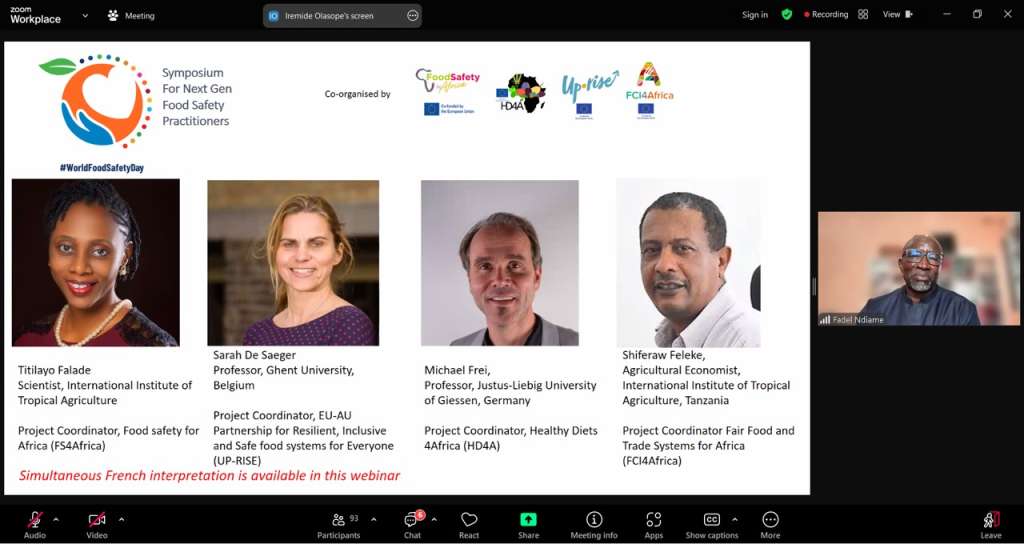
On June 4, Shiferaw Feleke, FCI4Africa’s Coordinator from the International Institute of Tropical Agriculture (IITA, Tanzania), presented an overview of our Consortium, highlighting the project’s:
- Rationale and goals
- Systemic approach to innovation
- Focus on science-based policy influence
- Expected outcomes for resilient, climate-neutral, and equitable food systems
His presentation underscored how FCI4Africa is working to bridge science, policy, and practice across African food value chains.
Poster Presentations
On June 5, FCI4Africa researchers shared new scientific insights during the poster presentation sessions:
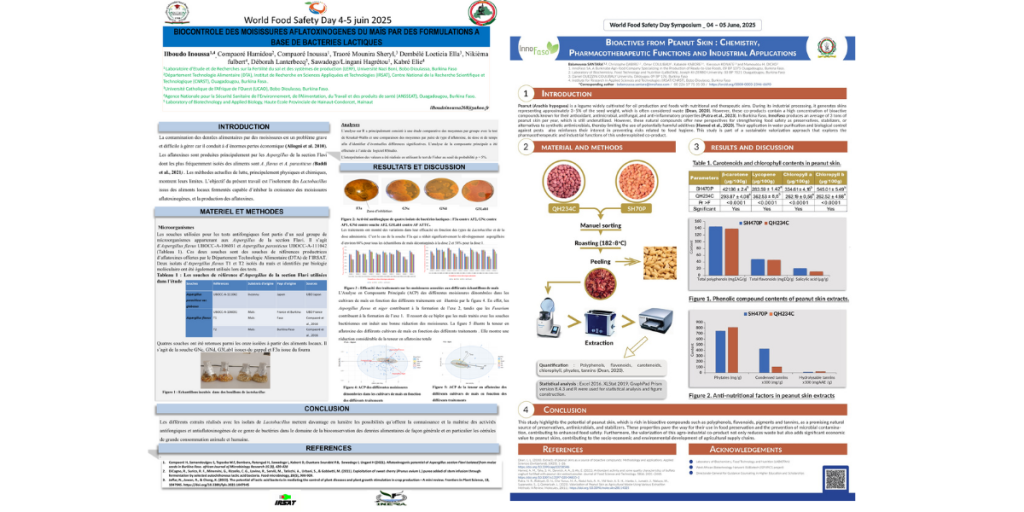
Ilboudo Inoussa (Université Nazi Boni / ANSSEAT) presented his research on “Biocontrol of Aflatoxinogenic Corn Moulds Using Lactic Acid Bacteria Formulations”, while Balamoussa Santara from InnoFaso showcased findings on bioactives from peanut skin, a promising natural source of preservatives, antimicrobials, and stabilisers.
Expert Insight
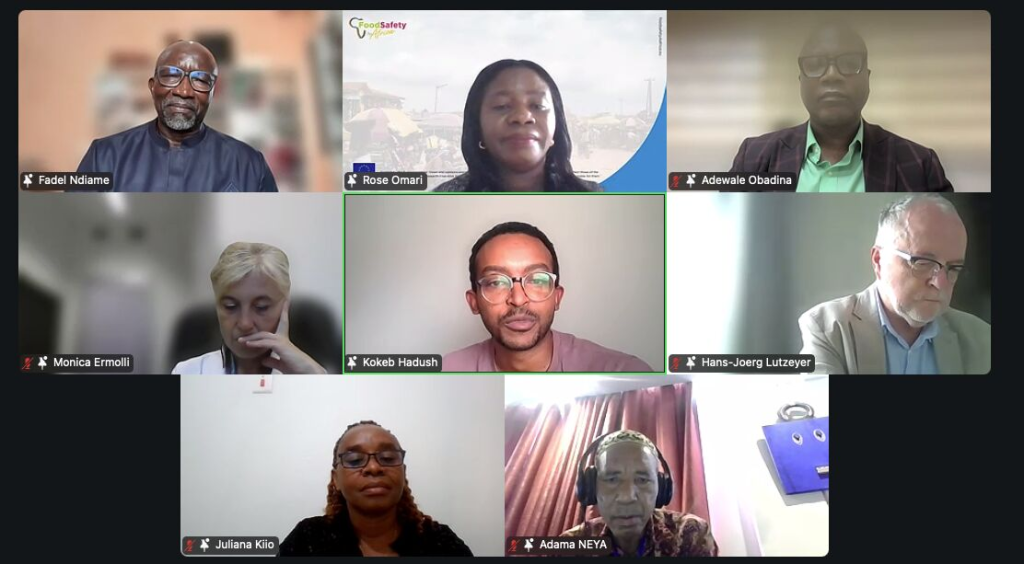
In addition, Adama Neya, Plant Pathologist at L’Institut de l’Environnement et de Recherches Agricoles du Burkina Faso (INERA), joined the expert panel to discuss critical food safety issues in African contexts, including:
- Why food safety in informal markets is essential for protecting consumers and building trust in local food systems
- How fragmented trade standards and high certification costs are barriers to compliance, especially for small producers
- What FCI4Africa is doing to engage early-career professionals in shaping and improving regional food safety standards through research, training, and policy dialogue
 Cross-Project Collaboration Driving Shared Progress
This Symposium reflected the power of inter-project collaboration. By co-organising the event, FCI4Africa, FoodSafety4Africa, UP-RISE, and HealthyDiets4Africa demonstrated how cross-project synergies can:
- Amplify science-based solutions
- Strengthen capacity among young African researchers
- Inform more coherent and evidence-based policymaking
Panel discussions featured experts from the European Commission, African Union, and project partners from across Africa and Europe, reinforcing the commitment to advancing jointly led food safety innovation on the continent.
Aligned For Impact
In alignment with the World Food Safety Day theme, the Symposium showcased that science is not a standalone effort; it is most powerful when connected to policy goals and on-the-ground action.
FCI4Africa and its sister projects are well-positioned to continue this work by building partnerships that are inclusive, innovative, and impact-driven.
Together, we can create better food systems for all.
Download the Symposium Highlights here.